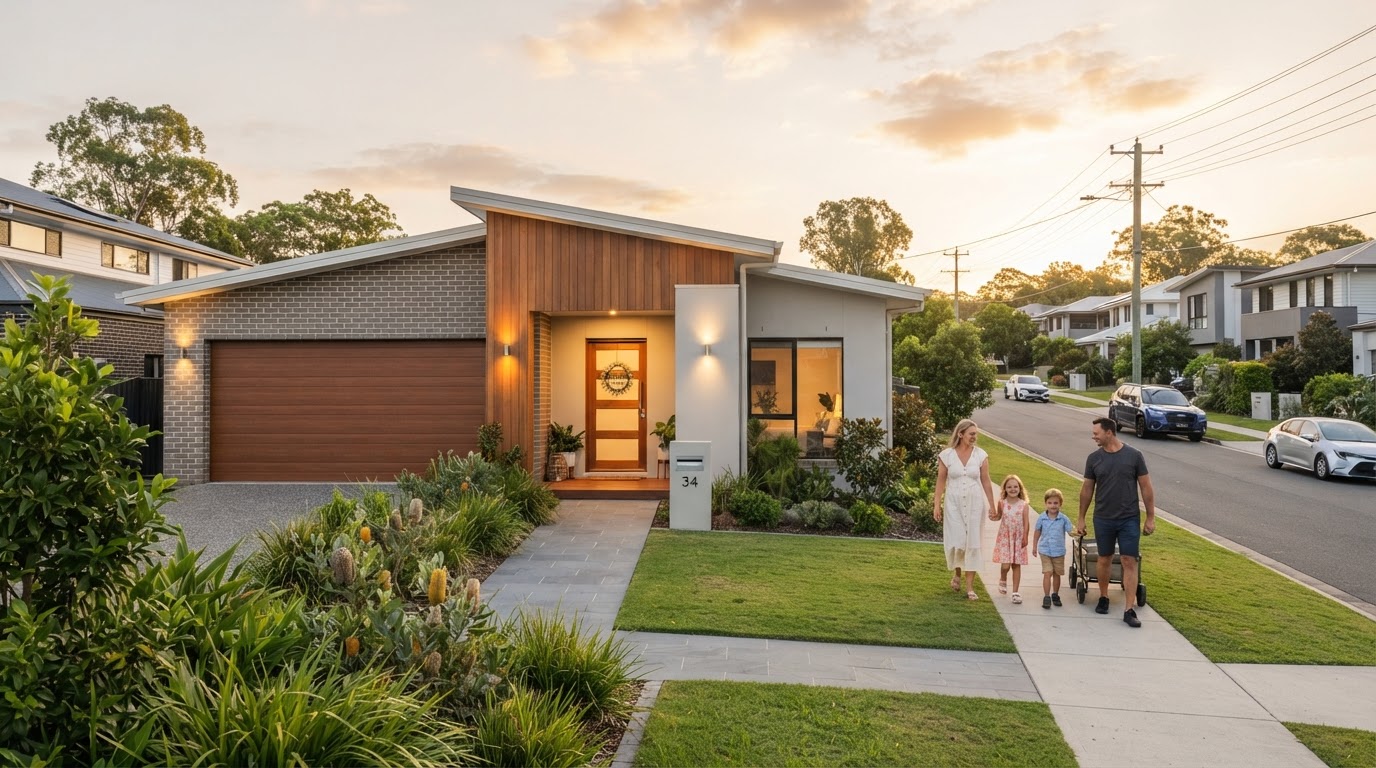
Turnkey builders fall into three routes: volume builders like Metricon, Simonds and Coral Homes for predictable pricing, design-led builders like McDonald Jones, GJ Gardner and Hotondo for flexibility, and advisory routes. Find Select Buy is not a builder but an independent buyers advocate giving access to 20 builders and 35 lenders with 100% fixed-price turnkey homes.
- Volume builders suit buyers who value certainty over customisation and handle irregular blocks poorly.
- Design-led builders offer flexibility and site expertise but carry longer timelines.
- Compare quotes across six inclusion buckets, including site works, structure, finishes, kitchen, bathrooms and external works.
- Ask whether site costs are a fixed allowance or provisional sum, since allowances shift the final price.
- Find Select Buy offers a free 15-minute consultation covering eligibility and low deposit options.
Ready to stop renting and start building? We match you with turnkey builders and lenders, free, from first call to handover.
Turnkey Builders Compared: What to Expect From Each
Finding a new home through turnkey builders means one contract covers land, construction and finishes, so you move into a completed house rather than managing trades yourself. At Find Select Buy, we provide access to 20 builders, and the differences between them matter more than the brochures suggest.
Three broad routes exist: volume builders with standardised designs, design-led builders allowing more customisation, and advisory routes that put an independent advocate between you and the builder. Each suits a different buyer.
| Route | Examples | Strength | Trade-off |
|---|---|---|---|
| Volume builder | Metricon, Simonds, Coral Homes | Predictable pricing and process | Limited structural changes |
| Design-led | McDonald Jones, GJ Gardner, Hotondo | Flexibility and site expertise | Longer timelines |
| Family-owned or advisory | Burbank, Find Select Buy | Complete packages, independent guidance | Availability depends on partners |
Volume Builders: Metricon, Simonds and Coral Homes
The common limitation: standardised designs handle irregular or sloping blocks poorly, and major structural changes usually fall outside the base price.
Best for: buyers who value certainty over customisation. Skip if: your block is unusual or you want a heavily modified layout.
Design-Led and Flexible Builders: McDonald Jones, GJ Gardner and Hotondo
McDonald Jones brings architectural styling and steel framing to a turnkey package, with in-house interior design support. GJ Gardner handles difficult sites, including sloping blocks, and runs a no-surprise pricing model through local offices. Hotondo operates as a franchise network, so local council knowledge is strong, though experience varies between offices.
Flexibility has a scheduling cost.
Best for: buyers with challenging land or specific design requirements. Skip if: speed to handover is your priority.
Family-Owned and Advisory Routes: Burbank and Find Select Buy
Find Select Buy takes a different position: we are not a builder. We act as your independent buyers advocate, giving you access to 20 builders and 35 lenders, with 100% fixed-price turnkey homes and guidance on finance and government grants.
The advantage is comparison. You see multiple builders and lenders side by side rather than accepting the first quote. Our service is complimentary to you.
Best for: renters who want guidance through builder and lender selection. Skip if: you have already signed with a builder.
What Is Included in a Turnkey Home?
A turnkey home is a complete build package where the builder delivers a finished house ready to occupy, covering site works, construction, fixtures and finishes under one contract. The inclusions schedule, not the headline price, tells you what you actually receive.
The inclusions categories that decide comparability
Group every quote into the same six buckets so you can line builders up side by side:
- Site works and earthworks, site cut and fill, slab type (waffle raft, stiffened raft or engineered), retaining walls, rock removal, drainage and service trenching. Ask whether these are a fixed allowance or a provisional sum.
- Structure and envelope, framing (timber or steel), roof covering, external cladding, windows and glazing ratings, insulation and waterproofing.
- Internal finishes, floor coverings, wall and ceiling paint, skirting, cornice, internal doors and hardware, and the standard range for each.
- Kitchen and laundry, cabinetry, benchtop material, splashback, sink, tapware, oven, cooktop, rangehood and dishwasher, plus whether appliance brands are nominated or builder's range.
- Bathrooms and wet areas, tiling to floor and walls (and the height tiled), vanity, basin, tapware, shower screen, bath, toilet and exhaust fans.
- External works and connections, driveway, crossing, fencing, landscaping, letterbox, clothesline, rainwater tank if required, and utility connections (power, water, sewer, gas, NBN).
Where builders quietly differ
The same six buckets hide the biggest variances:
- Driveway and crossing, some include a standard concrete driveway and crossover; others exclude both.
- Fencing, often excluded, or limited to side and rear fencing only, with front fencing left to the owner.
- Landscaping, turf, garden beds and irrigation are frequently outside the base price even in complete packages.
How to compare inclusions like for like
Ask every builder for the written inclusions schedule attached to the base price, then build a spreadsheet with one column per builder and one row per item above. Mark each item as included, excluded, allowance or upgrade, recording the dollar figure where an allowance applies and what happens if actual costs exceed it.
The contract documents that define the scope
Three documents define what you get: the inclusions schedule, the specification (naming brands, models and standard ranges) and the plans. Read them together, because an item can appear on the schedule but be limited by the specification to a base range you may not want. Ask which items are provisional sums and which are fixed, and confirm in writing that any display-home feature you saw is either standard or priced as an upgrade.
Turnkey Home Building Costs and the Extra Costs Advertised Prices Miss
Many advertised online prices are marketing prices designed to generate enquiries rather than reflect your final cost. The real number depends on your site, inclusions and selections, and the gap between the advertised figure and the contract price is where most buyer frustration originates.
Why the advertised price is not the contract price
A displayed price typically assumes a standard, flat, cleared block in a nominated estate, with base-range finishes and no site complications. Change any assumption and the price moves. Builders are not required to advertise a price that includes site costs, and many deliberately separate the two so the headline looks lower.
The common extras, and how they are priced
- Site costs, retaining walls, rock removal, fill, drainage and slab upgrades on sloping or reactive soil. These are often quoted as an allowance; ask for the figure and the mechanism if actual costs exceed it.
- Developer and estate requirements, some estates specify fencing styles, landscaping, facade treatments or colour palettes that add cost beyond the builder's base scope.
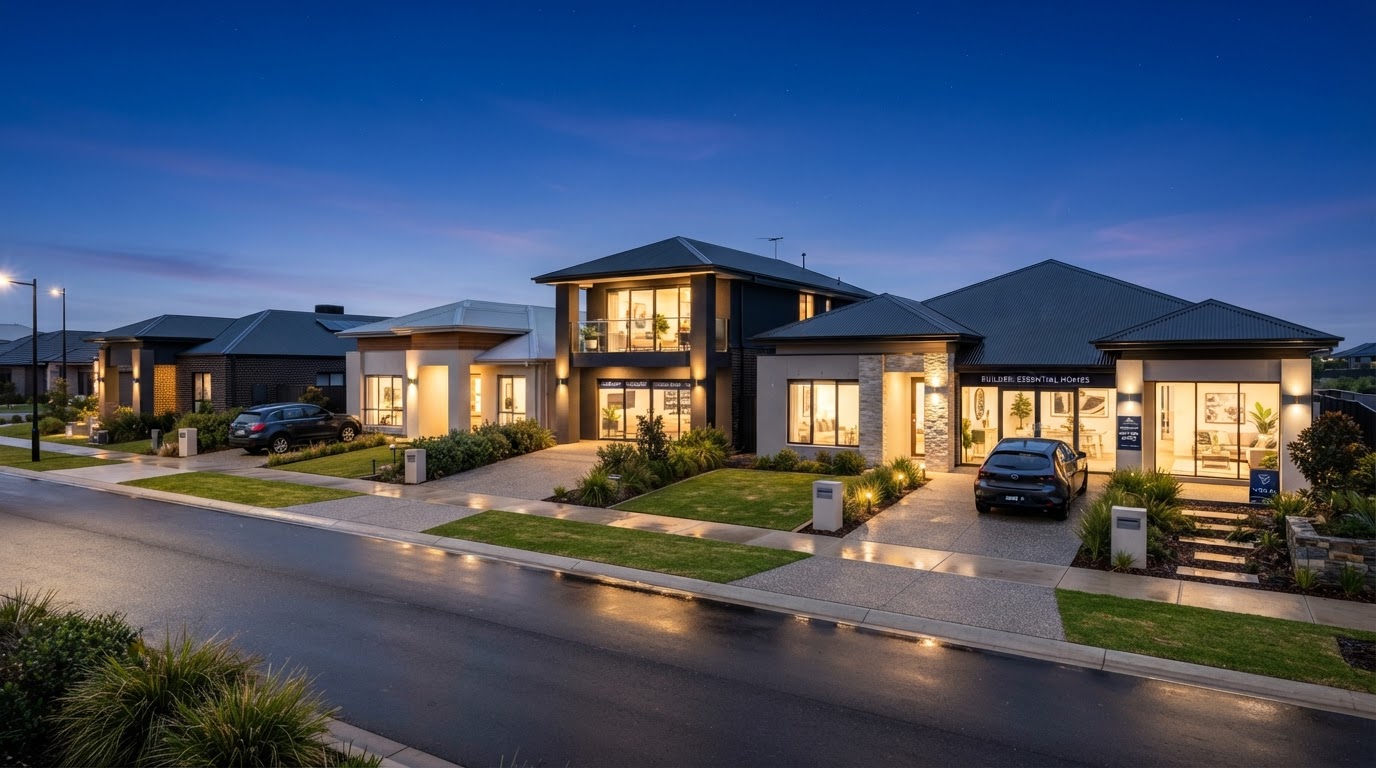
- Upgrades, floor coverings, cabinetry, benchtops and appliances above the standard range. Display homes are usually heavily upgraded, so confirm which finishes are standard.
Allowances, provisional sums and variations
Three contract mechanisms determine how far the final price can move:
- Allowance, a set dollar figure included in the contract for an item whose final cost is unknown (commonly site costs). If actual cost exceeds the allowance, you pay the difference.
- Provisional sum, an estimate for work that cannot be fully defined at contract signing. It is adjusted up or down once the work is priced.
- Variation, a written change to the contract scope or price, which should be signed before the work proceeds.
Ask every builder which items are fixed, which are allowances and which are provisional sums, and get the figures in writing. A fixed-price contract with a defined site allowance is more predictable than one with an open-ended estimate.
Building a realistic budget
Start from the advertised price, add the site allowance, a contingency for upgrades and selections, and any excluded items you intend to include (fencing, landscaping, driveway, window furnishings). Confirm what deposit is required and when progress payments fall due, because cash flow matters as much as the total.
For a deeper look at where these costs hide, read our guide on avoiding hidden site costs when building a home.
New Home Builder Comparison: How to Judge Builders Like for Like
Comparing builders properly means comparing inclusions, site cost allowances and contract terms, not display home styling. Two packages at the same price can differ significantly once you align what each includes.
Use this checklist before you commit:
- Written inclusions schedule for the base price
- Site cost allowance stated as a fixed figure, not an estimate
- Contract type: fixed-price or cost-plus
Before you start comparing, it helps to review your deposit, credit, locations and turnkey packages so you approach builders with a clear picture of your position.
Questions to Ask a Home Builder Before You Sign
Ask about site costs, contract type, inclusions, timelines and what happens if the builder cannot complete the build. The answers separate builders who price transparently from those who rely on variations later.
Five questions worth asking every builder:
- Is this a fixed-price contract, and what is excluded? Get exclusions in writing.
- What is the site cost allowance, and what happens if actual costs exceed it? A defined allowance protects you; an estimate does not.
- What is in the standard inclusions range? Visit a display home and confirm which finishes are standard versus upgrade.
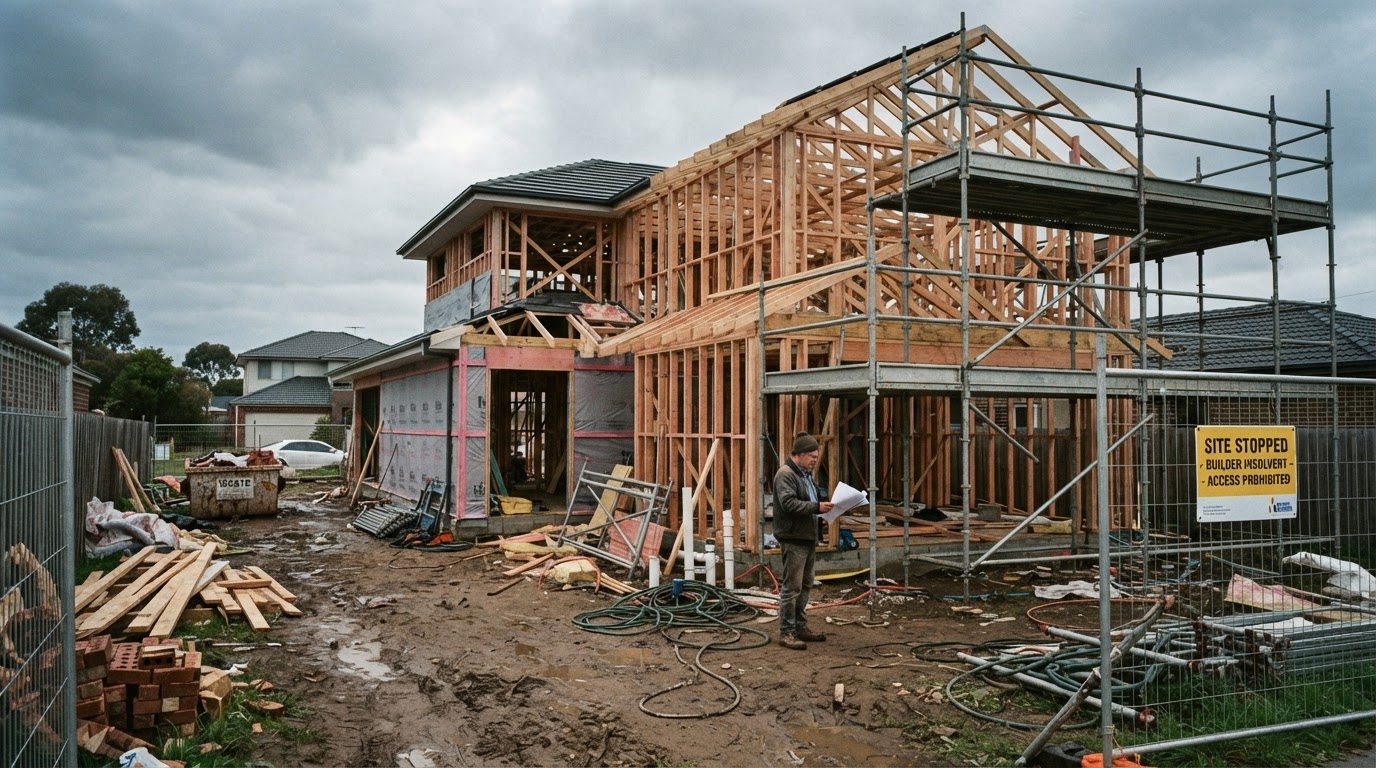
- What happens if the build is delayed or the builder becomes insolvent? Ask about progress payment structures and insurance. Our article on what happens if your builder goes bankrupt covers the protections available.
- Who manages approvals, and what are the developer's requirements? Estate covenants can add cost.
Check My Options: Finding the Right Turnkey Builder for You
The right builder depends on your block, budget and how much involvement you want.
At Find Select Buy, we start with a free 15-minute consultation to understand your goals and check eligibility, including home ownership status, low deposit options, 12 months without mortgage repayments while your home is built, and available new homes. From there we help you explore floorplans and house and land packages matched to your location, or you can book a free new home guidance call to talk through your next steps.
Rising rents make the decision harder each year, but the path out is clearer when someone independent walks it with you. Find Select Buy provides a complimentary buyers advocate service with access to 20 builders and 35 lenders, 100% fixed-price turnkey homes, and expert guidance on finance and government grants from first enquiry to handover.
Frequently Asked Questions
What does turnkey mean when building a new home?
Turnkey means the builder handles the home from contract to handover so you can move in without managing trades yourself. A true turnkey package typically covers the design, approvals, construction, and the finishing items such as flooring, window coverings, landscaping and fencing. Inclusions vary between builders. Always compare the written inclusion list line by line rather than the headline price, and confirm what is excluded before you sign.
Are turnkey home packages fixed-price?
Some are, many are not. A fixed-price contract locks in the contract sum for the defined scope, but variations, provisional sums and items outside the scope can still change the final figure. Ask whether site costs, council requirements, developer guidelines and landscaping are included in the fixed price or listed as provisional. Find Select Buy works with 100% fixed-price turnkey homes and checks the inclusions so the total investment is clear from day one.
What costs might not be included in a turnkey home package?
Common exclusions include site costs for sloping or filled land, developer requirements, landscaping, fencing, driveways, window furnishings and some upgrade items. Many advertised online prices are marketing prices designed to generate enquiries, so the displayed figure can differ from the delivered price. Before comparing turnkey builders, ask for a full inclusions schedule and a list of provisional sums. A like-for-like comparison of what is actually included matters more than the advertised starting price.
How do I compare turnkey builders fairly?
Compare on inclusions, not headline price. Put each builder's inclusion list side by side and check flooring, window coverings, landscaping, fencing, driveways, appliance brands and site cost allowances. Then check contract terms, build timelines, warranty obligations and independent customer evidence. A new home builder comparison should also weigh builder experience, service area and whether the design suits your block. Find Select Buy provides access to 20 builders and 35 lenders.
What should I ask a home builder before signing a contract?
Ask what is included and excluded in writing, whether the price is fixed or subject to provisional sums, and how variations are priced. Confirm site cost allowances, developer requirements, build duration, progress payment stages and warranty terms. Ask who supervises construction and what happens if the builder does not deliver. These questions to ask a home builder reveal how transparent the contract really is, and the answers should be in the contract, not just the sales conversation.
Ready to Find Out If You Can Own Instead?
Take our free 2-minute check to explore low deposit new home options matched to your income and situation.