Hidden site costs are the expenses tied to preparing your block and meeting approval conditions that sit outside the builder's advertised base price, covering earthworks, soil remediation, retaining walls, council fees and service connections. Get an independent soil test and site survey before you pay a deposit, and confirm in writing whether siteworks sit inside or outside the base price.
- A geotechnical report classifies your soil and a site survey maps levels, boundaries, easements and service tie-in points.
- Ask your builder which soil classification and site conditions their base price assumes, in writing.
- Common fixed-price exclusions include rock removal, retaining walls, council fees, landscaping and driveways.
- Rebuild every quote into one comparison sheet with identical rows before you compare totals.
- Set aside a contingency buffer for items you cannot yet price before you commit.
Ready to avoid hidden site costs? Find Select Buy offers a free buyers advocate service with fixed-price turnkey homes and no buyer fees.
Why Hidden Site Costs Catch Homeowners Out
The base price on a brochure is rarely the price you pay.
Research from the University of Southern Queensland's analysis of home building found that many buyers fail to account for hidden construction costs until late in the process. That delay creates real stress.
A fixed price only protects you if you know what it includes. Here is how to find out before you sign.
Your Building Site Costs Checklist Before You Sign
A building site costs checklist turns guesswork into a set of questions you can actually answer. We've created a guided pathway to help you explore possible home styles, choose preferred locations, and discover what steps will help you move closer to a new home. Work through it before you pay a deposit, not after.
- Get an independent soil test and site survey
- Confirm the block's slope and drainage path
- Check utility connection points and distances
- Ask the council about development conditions and contributions
- Request the full inclusions and exclusions list in writing
- Confirm whether siteworks are inside or outside the base price
- Ask what allowances are set and how they are adjusted
- Verify the builder's licence and financial standing
Verify the Block, the Soil and the Services
Start with the ground under your feet. Soil conditions decide how much excavation and foundation work you need, and that number can move a budget fast.
A geotechnical report tells you what the soil is made of and how it behaves when wet. A site survey maps levels, boundaries and easements.
Service connections are the other quiet cost. Ask where power, water, sewer and stormwater connect, and who pays to bring them to the house. The further away they sit, the more you should expect to spend.
Soil Test and Site Survey Costs Worth Paying For
Soil test and site survey costs are small compared with the risk of skipping them. Paying for both up front is one of the few genuine bargains in building, but only if you know what you are buying and how the results flow into your contract.
A geotechnical report (often called a soil test) classifies the soil and tells you how it behaves when wet. A site survey maps levels, boundaries, easements and service tie-in points. Together they are the evidence base for every site cost that follows.
What Each Report Actually Tells You
A soil test returns a classification plus recommendations on footing design and slab type, and the classification matters because it affects how much footing and slab work your block may need.
A site survey gives you contours, boundary dimensions, easement locations, existing services and the natural fall of the block. From that you can read how much cut and fill is needed, where drainage will run, and whether a retaining wall is likely. Ask for the survey in a format your builder can price from, not just a PDF picture.
How Block Type Changes the Cost Picture
The same house on four different blocks can carry four very different site costs. A flat, serviced block with stable soil is the low-cost case: minimal earthworks, standard footings, short service runs. A sloping block adds cut and fill, retaining walls and drainage, and the steeper the fall the more the wall heights and engineering fees climb. A reactive-clay block adds footing depth and slab design even on flat ground. An unserviced block, no sewer, water or power at the boundary, adds connection and trenching costs that can dwarf the reports themselves.
Ask your builder to state, in writing, which soil classification and which site conditions their base price assumes. If the assumption is A or S class and your report says H2, you have found a variation before it happens.
Watch out: a builder who quotes without seeing a soil report is guessing, and that guess can become a variation later.
Builders increasingly advise buyers to research utility access and site conditions before finalising contracts, according to Taylor Homes' guidance on pre-planning. The point is simple: information bought early is cheaper than surprises found late.
Turning the Reports Into Contract Leverage
Once you hold the soil report and survey, use them. Ask each builder to confirm the soil classification their price is based on, whether rock removal is included or allowed, and what the allowance is for cut and fill and retaining. Compare those answers against your reports rather than against each other.
Keep copies of both reports and attach them to the tender documents. A builder who prices from your reports has less room to claim a variation later, and you have a written record of what was known at signing.
Fixed-Price Building Contract Exclusions That Change the Total
Fixed-price building contract exclusions are the line items that sit outside the agreed price. Read them before you compare totals, because two "fixed" quotes can differ wildly once exclusions are counted.
Common exclusions include:
- Siteworks beyond a set allowance
- Rock removal and unsuitable soil
- Retaining walls and drainage works
- Council fees and developer requirements
- Landscaping, fencing and driveways
- Upgrades to fixtures and finishes
Provisional Sums, Prime Cost Items and Allowances
These three terms decide who carries the risk when a cost is unknown at signing.
A provisional sum is an estimate for work that cannot be priced yet, such as earthworks. A prime cost item is an estimate for a fixture or finish you have not chosen. An allowance is a set amount for something like tiles or tapware.
If the real cost comes in higher, you usually pay the difference. Ask your builder to explain each one and how it is adjusted. Then ask what happens if you go over.
Questions to Ask a Builder About Site Costs
Questions to ask a builder about site costs should be specific and written down. Vague answers are a warning sign, not a comfort.
Ask these directly:
- Are siteworks included in the base price or allowed separately?
- What soil classification is this quote based on?
- What happens if rock is found during excavation?
- Which council fees and developer contributions are excluded?
- Are retaining walls and drainage included?
- What is the process for variations, and who approves them?
- What happens if the build runs late?
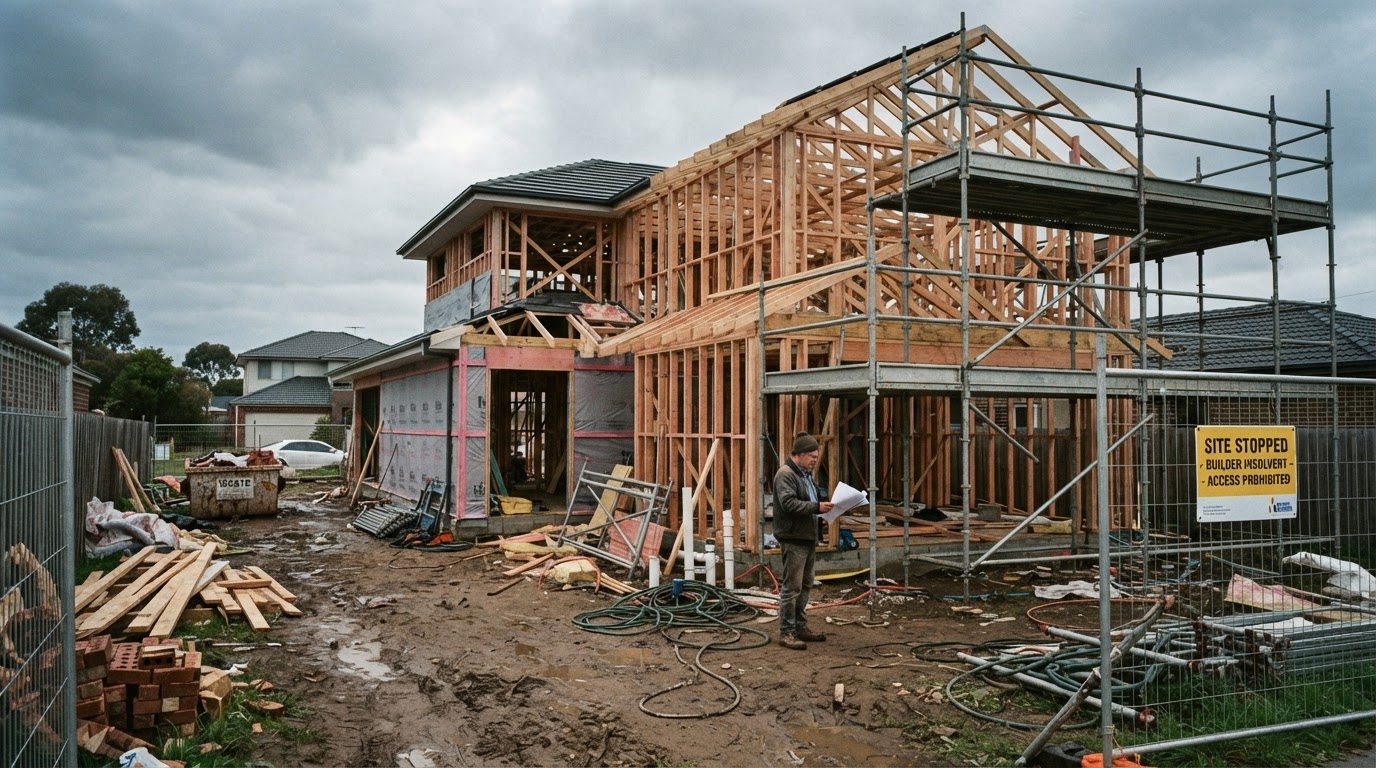
Before you sign anything, it also pays to understand what happens if your builder goes bankrupt. Site costs and contracts both depend on the builder staying solvent through completion.
Siteworks, Approvals and Connections That Sit Outside the Base Price
Siteworks, approvals and connections are the three areas where base prices most often fall short. Each one is real money, and each one is negotiable only if you raise it early.
Earthworks, Retaining Walls and Drainage on Sloping Blocks
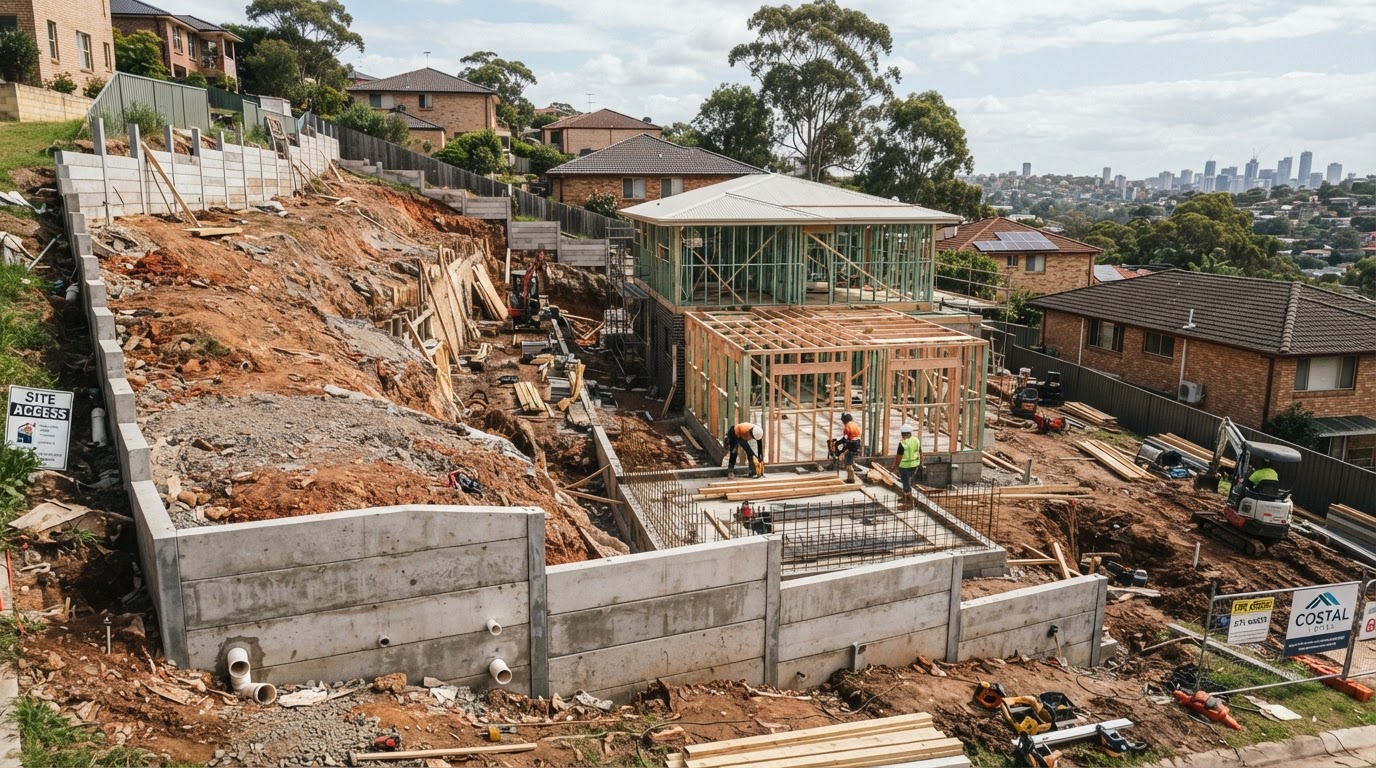
A sloping block changes everything. Cut and fill earthworks, retaining walls and drainage all become necessary, and none of them are cheap.
Flat blocks keep these costs low. Steep blocks can multiply them. Ask for a site plan showing cut, fill and wall heights before you commit.
Watch out: a retaining wall required by council is not always in the builder's scope. Confirm who builds it, who pays, and who certifies it.
Comparing Builder Quotes on an Apples-to-Apples Basis
Comparing builder quotes only works when every quote covers the same scope. Line up the inclusions and exclusions side by side before you look at the totals, then reconcile the uncertain items so you are comparing like with like.
Build a Normalised Comparison Sheet
Take each quote and rebuild it into one spreadsheet with the same rows. Use these rows for every builder so nothing hides in a different format:
| What to Compare | Question to Ask | Why It Matters |
|---|---|---|
| Base price | What is included? | A low base often means more exclusions |
| Siteworks | Included, allowance, or excluded? | Earthworks can swing the total |
| Soil classification | Which class is assumed? | Reactive soil costs more |
| Rock removal | Included up to what quantity? | Rock is a common variation trigger |
| Retaining walls | In scope, by whom, certified by whom? | Often sits outside the builder's price |
| Approvals | Which council and developer fees are excluded? | These add up quickly |
| Service connections | Who trenches and who pays? | Unserviced blocks change the total |
| Provisional sums | What amount, and how reconciled? | Low sums flatter the headline price |
| Prime cost items | What allowance, and what happens over it? | Finishes are a common surprise |
| Upgrades | Standard or upgrade? | Showroom pricing differs from contract pricing |
| Variations | What is the process and who approves? | Controls cost changes |
| Timeline | What penalties apply? | Delays cost money |
Reconcile the Uncertain Items
The headline price is not the comparison price. Add back every provisional sum and prime cost allowance at its stated amount, then ask each builder what the same item would cost at a realistic mid-range specification.
Do the same for siteworks. If one quote includes earthworks to a set allowance and another excludes them entirely, add a common allowance to both so the totals sit on the same footing.
Watch out: a very low provisional sum is not a discount, it is a deferred cost.
Read the Contract Terms Behind the Numbers
The numbers only tell half the story. Check the variation clause, the provisional sum reconciliation method, any escalation or rise-and-fall clause, and the delay provisions. A quote with a tight price but a loose variation process is riskier than a slightly higher quote with clear cost controls.
If you want help reading the differences, you can book a free new home guidance call with a buyers advocate who can walk you through each quote.
Building a Realistic Budget With a Contingency
A realistic budget includes a contingency, and the contingency is not optional.
Set aside a buffer for the items you cannot yet price. A few simple steps can help you move closer to a new home with a clear picture of what you can afford.
At Find Select Buy, we work with 20 builders and 35 lenders to help buyers secure 100% fixed-price turnkey homes.
Hidden site costs are manageable when you ask the right questions early.
Frequently Asked Questions
What are site costs when building a home?
Site costs are the works needed to make a block ready to build on, separate from the house itself. They include soil testing, land clearing, excavation, levelling, retaining walls, drainage, service connections and council fees. Many advertised base prices exclude some or all of these, which is why hidden site costs surprise buyers late. Ask for a line-by-line site cost breakdown before you compare builders, because a low base price with thin site allowances is rarely the cheaper option.
Can site costs increase after a fixed-price building contract is signed?
They can if the contract contains exclusions, provisional sums or allowances. A fixed-price contract only fixes what is written into it. If rock is found after signing, or a council requires a different drainage design, those items may fall outside the fixed price. Read the exclusions schedule carefully and ask the builder to confirm in writing which siteworks are locked in and which are estimates. Getting soil testing and a site survey done before signing reduces the chance of a variation later.
How much should I budget for unexpected site costs?
Builders generally recommend holding a contingency rather than assuming every cost can be avoided. The right amount depends on your block: a flat, serviced block carries less risk than a sloping site with unknown soil. Ask your builder what contingency they would hold for your specific block, and keep a separate buffer of your own for landscaping, fencing and driveways, which usually sit outside the building contract and are paid after handover.
What documents should I review before accepting a builder's quote?
Ask for the soil test and geotechnical report, the site survey, the full inclusions and exclusions list, the provisional sums schedule and the drawings the quote is based on. Check whether the quote includes council fees, utility connections, retaining walls, landscaping and fencing. At Find Select Buy we compare the complete picture across builders so the total investment is clear from day one.
Ready to Find Out If You Can Own Instead?
Take our free 2-minute check to explore low deposit new home options matched to your income and situation.